How PowderBoard thinks
Why PowderBoard plans from the silo
Small ready-mix producers and the haulers who feed their silos do not need a second system. They need the day to stay in one place, and they need the math to trust what actually happened.
One board, not a stack of notebooks
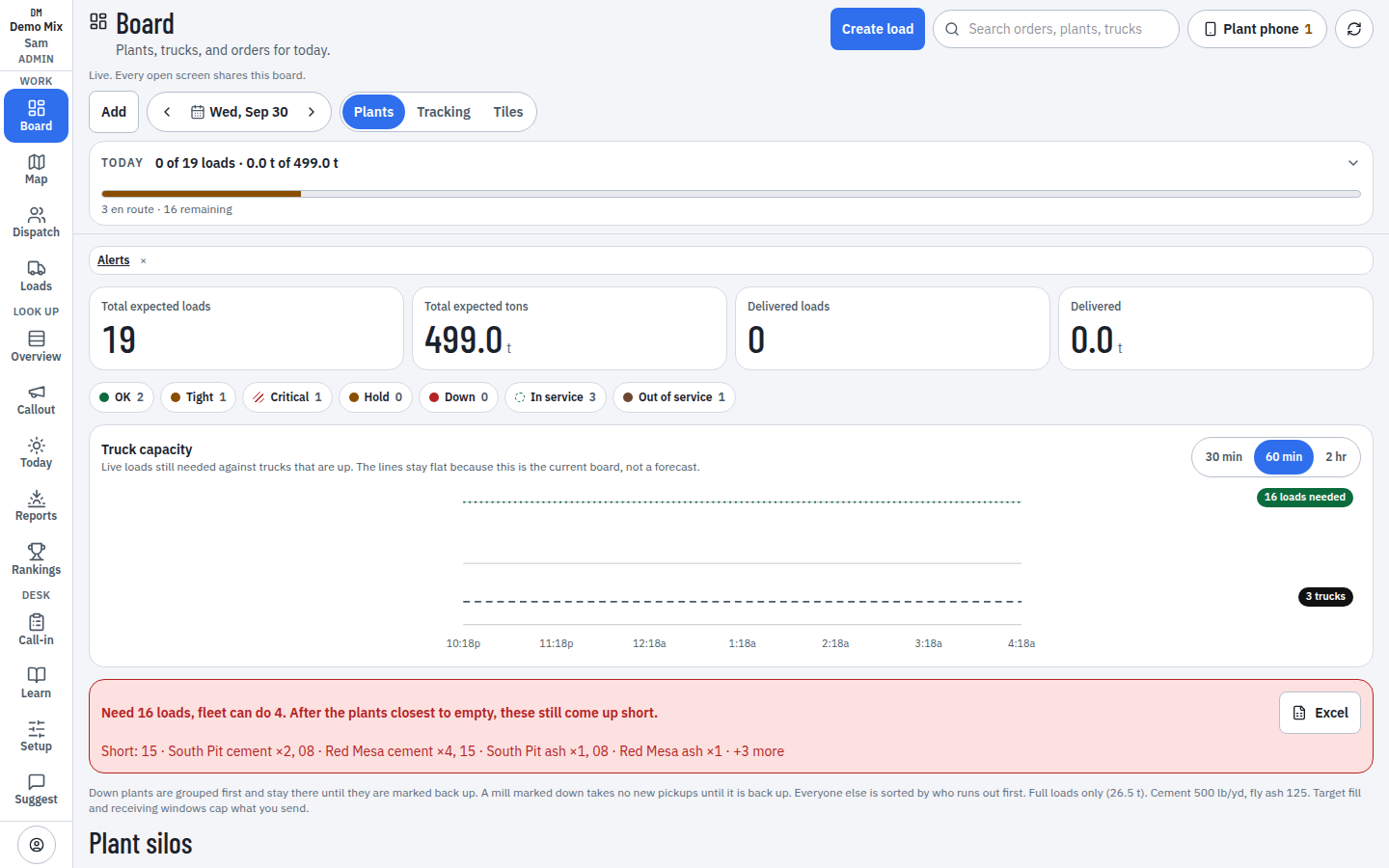
The silo, the truck, the mill, and the driver are the same day. Splitting them means the person on the phone is always a page behind the person at the plant. PowderBoard keeps that day on one board, and every screen is a view of it.
Silos first
A powder dispatcher is not assigning rides. They are keeping cement and fly ash in the silo until the pour is done. Hours of cover come before a pretty truck list. The truck is how the silo gets filled.
Learn from live taps, not from a sheet filled in later
A status marked when the truck does the work can teach a haul, a load time, or a blow. A status typed at the end of the day is kept so the load is right, and it is left out of the average. One late cleanup should not bend every plan after it.
A quiet dispatch desk
The board is dense on purpose. Plants, trucks, and statuses fit on one screen, the way a dispatcher expects a desk to look, without a second chrome of charts around the work. Color is the status. The rest stays out of the way.
The map is the day, placed
Truck positions on the map come from the statuses on the board and typical drive times between mills and plants. A dispatcher can see who is heading where, what is loaded, and which plants are waiting.
Any browser
The dispatcher’s laptop, the iPad on the counter, and the phone at the plant open the same board. There is no store app to install. An iPhone can add the icon to the Home Screen when it wants alerts. The board itself is the site.